Sunday, July 10, 2011

My Research Toas Institute Grant


I am very happy to share that recently I have been awarded a Tao Associate Grant ( TAG) project . The Taos institute ( www.taosinstitute.net) has awarded me as small grant project on following

Project

The development of tools for the promotion of self-help among farmers adapting to climate change in Bangladesh, using social constructionist and appreciative inquiry resources

Duration of the project

12 months (May, 2011 –April, 2012)

Location of the project

Patikabari village of Bhadurpur Union of Pangsa Thana under Rajbari District of Bangladesh

Collaborative partner organization and contact person

Voluntary Organization for Rural Development (VORD)

Village & Post: Habashpur

Thana: Pangsa, District: Rajbari

Bangladesh

Email: vord_org@yahoo.com

Background and objectives

Extreme events of climate change affect the livelihoods of communities that depend on agriculture. Talks concerning climate change, its effects on agriculture and ways to adapt are largely dominated by the thoughts of external scholars and professionals; rarely do experts pay attention to the ways that farmers themselves address these significant problems, nor do these professional people work together with farmers to improve their responses to climate changes. Yet, relational interactions of farmers, their agriculture, and climate variability continuously generate learning and innovations of adaptation ; how farmers develop adaptive measures can be seen as one of the life giving forces to climate change. However, traditions of problem solving and professional domination in development and social change arenas usually do not encourage the promotion of horizontal sharing of knowledge and innovation through creating enabling knowledge sharing infrastructure; the subject-object structure of transferring professionals’ thoughts to the farmers often does not match the diverse local situations farmers find themselves in.

Integrating the principles of Social/Relational Construction and the 4-D cycle of AI offers us the potential and possibility to promote self-help means towards climate change adaptation in agriculture among these people.

The main purposes of this project are to:

  • Pilot an AI cycle in a rural ( agri-livelihood based) community of Bangladesh in order to promote local innovations and actions affecting climate change adaptation in agriculture;
  • Develop a contextualized AI facilitation tools (useful for grassroots change workers) in order to facilitate farmers’ community in order to promote self-help with regard to climate change adaptation in their agriculture.

Expected outcomes:

· vVORD will have a community level project of AI for the promotion of local innovations and actions towards climate change adaptation in agriculture.

· VORD as a local NGO in Bangladesh will develop its capacity to facilitate AI for the promotion of local innovations and actions towards climate change adaptation in agriculture

· Experiential learning will be packaged in the form of facilitating tools to be shared by others involved in this pursuit.

· What did we do up yet?

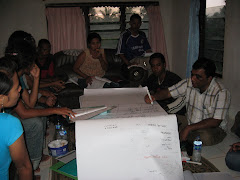
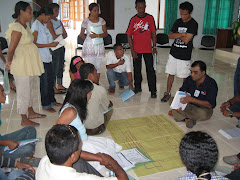
J June 15- July 15 , 2011: June 17 : On June 17, 2011 I traveled from manila to Dhaka. At the first I contacted Dr. Majed , Chairperson of VORD and shared with him the project . About 10 days I did some networks with Several NGOs, consulting firm and academe and talked with them individually about the concept of SC-RC and the research project. while Dhaka , I did not want to spend my project my unnecessarily staying in Hotel thus I stayed in a NGO guest house namely Institute of Environment and Development . July 1, 2011, I went VORD project field and stayed their up to July 8. During these 8 days I have done following activities:

  • Project sharing meeting with the VORD executive committee members and senior staff members.
  • Facilitating a dialogue session with few local NGO members on social-relational construction , application of AI in promotion of self-help in development and social chnage
  • Orientation to the selected VORD staff on Appreciative Inquiry and preparation of action plan for VORD staff ( this orientation included discussions and field visit with Patikabari village farmers community members)
  • I traveled from Habashpur village ( Location of VORD office) to Dhaka on July 8
  • On July 9 I had a dialogue and presentation on AI and social-Relational construction on Change work this event took place in Ambrosia Guest house in Dhanmoni, Dhaka this meting was participated by about 15 persons representing NGO executives , university teachers, free lance development consultants. In this meeting i shared my power point which I presented in the 1st asian AI summit; held in Manila , Philippines . This event was organized in collaboration with Appreciative Consultancy Services International Bangladesh ( www.acsibd.com) . All meeting participants liked the AI and social-relational construction concepts in development work.
Output created thought this first mission

Though discussions with VORD staff we have decided to apply following tools for next few months ( July to September) which will be utilized by assigned VORD staff : Step 1: Listening to the farmers : This activity will be conducted by VORD staff during July- August 2011. The listening activity will be conducted on following learning questions :
  • What kind of climate variable changes perceived by the community?
  • What kind of seasonal changes perceived by the Farmer community ?
  • What farmers are doing to adapt ?
For learning and creating dialoguing with wider community members of Patikabri though dialogue and discussions with VORD staff we have thought of following tools to be applied :
  1. Time line climate variability change
  2. Tim line seasonal variations
  3. Time line seasonal variation of cropping
  4. Informal dialogue on farmers adaption and identification
During July and August, 2011 VORD staff plan to apply these tools and document tools and storing of facilitating. Step 2: Village level story telling session of farmers adaptation of climate change session . Through dialogue and discussions with VORD staff and farmers of Patikabri farmers community we have though of following story questions:

Story question

· Tell a story about someone doing agriculture without using any chemical fertilizer and pesticide?

· Tell a story about someone doing agriculture with little chemical fertilizer and pesticide but largely using organic fertilizer and pesticide?

· Tell a story about a farmer and his farming who was able to reduce cost of farming

· Tell a story of a farmer who was able to control pest using organic pest control method

· Tell a story of a farmer who was able to improve fertility of land using organic fertilization

· Tell a story of a farmer who was able to protect crop and vegetable

· Tell a story of a farmer who was able to sow and germinate seeds successfully

· Tell a story of a farmer who was able to reduce crops harvest lose

· Tell story of of farmers ‘collective and cooperative actions for better agriculture .


Meeting i did with NGo executives has committed that they will try to apply AI in their staff management as a test .


What next

I next i plan to work with VORD either last part of September or beginning of October to have participatory reflection and documentation of experiences, and plan for next steeps with VORD.


Me


Thursday, March 31, 2011

More: who said what about me

I know Shayamal Saha very well for many years. In fact he was my student when I was teaching at the Global Partnership in Dhaka. I found him a very intelligent, hard working, studious, conceptually very good and an excellent person to work with. Shayamal is also a very good trainer. I wish him all success in life.” February 23, 2011.
Salehuddin Ahmed, Chief Technical Advisor, International Poverty Reduction Centre in China (IPRCC) Beijing
“Shaymal Saha has demonstrated precious experience in conducting participatory trainings, developing the concepts for capacity building programmes of all kinds, and has shown evidence of profound knowledge in the whole field of social and economic development. Besides that he always was loyal to the principles of our organisation, its strategies and codes of conduct. I can recommend him strongly for many tasks that require a profound level of knowledge and endurance.” February 15, 2011
Claude Ribaux, Ex Head of Division, Swiss Red Cross

Saturday, February 6, 2010

Politics of Positve in Community Empowrment- CKS used Appreciative Inquiry in CMDRR: A Case Sory

Politics of Positive in Community Empowerment

A Story of Appreciative Story Telling in CMDRR Project of Caritas Sibolga

Dr. Shayamal K. Saha

January, 2010

-----------------------------------------------------------------------------------------------

Sisobambowo, a desa (village) of Nias Island of Indonesia frequently exposed with flood; is one the many communities of Caritas Keuskupan Sibolga (CKS) (http://caritas-sibolga.blogspot.com/) covered by its Disaster Risk Reduction Project. In building disaster resilient community, CKS facilitates a community –managed disaster risk reduction (CMDRR) process in which communities are facilitated to form their organization, assess disaster risk, plan, implement and evaluate actions. This goes as continuous cycle. This participatory process of DRR is applied within the concept of problem solving, thus “what is the problem?” commonly becomes a central questions of dialogue and discussions. The facilitator of CKS-CMDRR team began to facilitate the Sisobambowo community since July 2007. Eventually in October 30 2007, a community DRR organization came into being in participation with 21 members in which Kepala Desa and customary leader of the community included. The First community DRR action plan of 2008 was successfully implemented by the community organization (CO). At the beginning of the year 2009 while developing the 2nd yearly action plan the CO of Sisobambowo included one of its activities is to constructed a small bridge in the village ; based on the need expressed by the community members. Economically poor community of Sisobambowo did not see their ability to provide financial resource needed for the construction of the bridge thus expectation to CKS. CKS fell into a dilemma; debate and discussions moved across the organization about whether CKS should provide direct financial support to the community organization to implement such a bridge construction project. CKS management could not make a firm policy decisions and provide resource support to the community for bridge construction. This circumstance generated frustration among the community and their organization. Since February 2009 dialogue between the CKS facilitators and the CO narrowed down to the only issue of Bridge Construction; when CO demanded support to construct bridge and CKS facilitator explained “they are not in a position to provide financial support. The CO began to feel “we cannot perform our role effectively to address community demand - so why should we continue this organization". On the other side CKS team began to feel “it’s so sad that the community and their organization showing negative attitude to them”. Eventually, the movement of Sisobambowo CO towards DRR collapsed; communication between CKS team and the community stagnated. I was reported by the CKS team that it is impossible to work with Sisobambowo CO until CKS provide financial support for bridge construction. This situation put across serious challenge to CKS management by posing an assumed threatening question “if after sometimes if a CO being failed to get one support stop their movement than how to facilitate self-sustainability of community organization in long run?”

December 2009, as a consultant of CKS-CMDRR project conducted the training on Participatory Monitoring and Evaluation to the CKS-CMDRR team. Without having any other alternative, for conducting field practicum part of this training we decided to go Sisobambowo and work with them. Thought this decision was made, but I could observe gloomy face of staff full of anxiety with uneasy feelings of not receiving any cordial response from the Sisobambowo CO. Anyway, we (all training participants plus me) went Sisobambowo on November 27, 2009. We had meeting, including the Kepala Desa ( Elected head of the village) and Customary Leader altogether 6 CO members kindly came to the meeting. Meeting started and soon the expression of frustration of not being able to construct the bridge became the centre – the discourse of deficit and frustration went for an hour gradually moved to a silence and then feeling of hopeless. At that stage, I made an effort to shift the discussions and dialogue from the failure to success. I asked the CO members to:

• tell a story about “being a member of the CO you felt proud of your organization doing good work for the community”

• tell a story about “you did something as CO members which made you happy”

• Tell a story about “as CO members you did something for the community and community members gave admiration to you?

Silence began to disappear; one after another, the CO members started to tell their experiential stories of success and being appreciated by the community. This positive/success story telling soon discovered that against one failure of bridge building the CO has made following nine successes:

1. Feeling happy because now they have an organization

2. They were able to do mahogany seedling

3. Got many education meetings with Caritas

4. Could organize regular saving money in their organization

5. Became a resource person to others in term of developing community organization, somebody asked & discussed on how to develop an organization (Fasa’aro – vice

1. secretary of CDRO)

6. People in the village come to the CO committee to discuss about their daily life problem

7. They collected some amount of money for earthquake survivors in Padang

8. The CDRO committee got respect from the people due to their position as community organization leaders. (Vina: in communal meeting like party, social celebration, they got simbi - a part of pork/pig body as a symbol of respect in Nias culture, because they are the members of DRR TF).

9. Sisobambowo got a project from health government office from Jakarta because they fitted with the important condition of the office: they had CO. Other villages didn’t get the project because they don’t have CO, so the existence of CO is a plus point for Sisobambowo.

Telling, sharing and identification of these success stories brought life in the dialogue by generating a sense of appreciation and proud among the members of community organization. Soon they realized that their organization made many success and they should not be frustrated of not being able to do only one - the construction of the bridge- for which they can continue their effort. They could also realize every day we do many good works for our family but it is not possible to meet all demand of all family members at a time. But not being fulfill one demand of a family member should not coz leaving of the guardian of the family. Unanimously all members in the meeting added “we will try to build the bridge but not being able to do so should not stop our other work”. They decided to have next meeting in the first week of December in which they will revise the yearly action plan and move. While coming back from Sisobambowo, on the way I had a small reflection meeting with the staff members of CKS-CMDRR team; I could clearly see the difference in their eyes and face from yesterday. Yesterday they came with feeling of regret and hostility; afraid and anxiety but today with sense of appreciation and enthusiasm. Months of stagnation and frustration transformed into power of moving forward when the TF members were facilitated to share their success stories –that gives life instead of doing postmortem of failure.

I did not know that the staff memebrs of CMDRR project of Caritas Sibolga liked it very much and they would jump on using appreciative story telling so quickly until I went though their annual reflection report 2009 which stated:

“At the end of 2009 in 13 new communities year end reflection meetings were held by using an appreciative approach (guiding questions of appreciative discussion,. Since in the past the process of analysis, awareness, mobilization and community organizing were performed by problem solving approach, in the year end reflection project team deliberately used another new approach (project team adopted this method from Appreciative Inquiry approach). The approach focuses on appreciative discourse that explores the positive side & the potential of community which aims to raise the pride and confidence of the community, so that through internal reflection they do, they find that they have their own power to do self help actions. Many activities came out from community initiatives actually already started to be done by the people since the CMDRR project started in their villages, even before the CO was formed. The experience of CMDRR team to perform appreciative approach in Sisobambowo and 13 communities in the year end appreciative reflection meeting has built the belief among the team members that the appreciative methods is very productive to motivate people to look at the future optimistically and confidently to develop themselves. “Appreciative approach” refer to an effort of facilitating a discourse, telling & sharing stories by exploring the positive & potential side of the community instead of focus on negative/deficit side that tend to raise frustration, hopeless & feeling of not confidence, something the team learned from “Appreciative Inquiry” approach. So CMDRR team will strengthen this approach in facilitating the further CMDRR process.”

2010 the Year of Challenge, Year of Hope: Reflection Notes on Implementation of 2nd Phase CMDRR, Caritas Sibolga, First Year, 2009

This case story put across few lessons for community empowerment facilitators:

· Language and vocabularies is not just a tool for reporting something or sharing ideas but language is the most powerful agent of changing, constructing and reconstructing realities; the way we speak, we form us and our reality.

· Instead of facilitating dialogues and discussions on deficit, community participation and community, management gets better momentum if they are facilitated to be engaged in dialogues and discussions through their success story telling.

· Success story telling not only center interaction processes of community but also generate great sense of appreciation among the community and the community facilitator thus enthusiasm to participate.

· Although it is better to apply 4D cycle[1] of Appreciative Inquiry (AI) without mixing it with Problem Solving approach but if an organization or project is not in position to make radical shift of its approach from PS to AI rapidly then it is also possible to apply ‘appreciative story telling/reflection’ that not only create better effects but also brings lessons and encouragement to the practitioners to learn more and practice AI .

Ample research findings and literature telling ‘starting with problem’ “ makes people / community dependent on outsiders while starting and moving with what the community have is contributory to genuine empowerment. CKS-CMDRR team has made a deliberate attempt of “shifting vocabularies of deficit into vocabularies of hope and strengths” in CMDRR- showing its positive contributions to develop self-reliant community organization. Be it DRR or Livelihood promotion or health & development, if we conceptualize community empowerment is not jut individualistic construction but collective wellbeing then it requires: a shift in focus from building individual capacity to what we can do together; genuine people’s participation and interaction; space for multiplicity - for local creativity and for different ways of learning; a learning culture that encourages community and change agents/ workers to be co-learners and co-constructors, and; working towards opening-up new possibilities. Facilitating success story telling and sharing contributes a lot. However, I would like to request CKS-CMDRR team to remain aware that AI is not just about shifting vocabularies but bringing multiple interaction processes as both unit of analysis and locus of change. I hope gradually the team would learn how to link concepts and approaches of relational/social construction of development and social change in AI cycle application; essential for social transformation.


[1] 4D refers Discovery, Dream, Design, Destiny

Thursday, February 4, 2010

Profile of works - 2010

March 2010: Nommensen University Indonesia: Design and conduct Evaluation of Capacity Building for Community Empowerment Towards Disaster Risk Reduction and Sustainable Development for The Center for Disaster Risk Management and Community Development Studies (CDRM&CDS) a department of HKBP Nommensen University, Indonesia.

June 2010: Cordaid Indonesia: Design and conduct training for its local Partner NGO PUSAKA Indonesia on Community Mobilization and Organization Development
in Community Managed Disaster Risk Reduction


July 2010: Caritas Asia: working in Ind1a together with a German Consultant to review and strengthen training manuals on family and community level emeregency disaster response preparedness.

October 2010: GTZ India & Government of West Bengal India: Visit Sundarbans and conduct a consultation with community and other stakeholders to assess climate change vulnerability and determine measures and suggested strategies for climate change adaptation. Develop a innovative conceptual and processual project framework as basis to design a pilot project proposal . Design and write a pilot project plan based on the framework. I prepared an innovation framework for climate change adaptation entitled: Participatory Local Innovations and Action (PLIA) for Climate Change Adaptation.

November 2010: OXFAM-GB-Bangladesh: Design and conduct final project evaluation on "Building Community Resilience to Floods in Central Region of Bangladesh with the funding support of European Commission Directorate-General for Humanitarian Aid – (ECHO) under V- DIPECHO action plan.

December 2010: Caritas Keskeupan Sibolga, Indonesia: Design and facilitate Participatory Mid Term Review (PMTR) of the project " Community Managed Disaster Risk Reduction

Saturday, December 12, 2009

Profile of Previous Works-November- December 2009

November 15 to December 8, 2009
Mauloboh and Nias , Indonesia.

In Mauloboh I facilitated a seminar " Community Management Promotion" organized by Caritas Switzerland ; participated by project staff and partner organizations of Caritas Switzerland, Indonesia.

In Nias, I worked for Caritas Keuskupan Sibolga. The first part of the work was to conduct a training to the staff on Participatory Monitoring and Evaluation and second part was Facilitating a workshop on Use of Performing Arts in Community Education and Awareness Creation".

On December 9/09 I am back Philippines. Have to prepare a new consultancy proposal by next two days . By December 2009 and January 2010 I wish to prepare some concept note too.